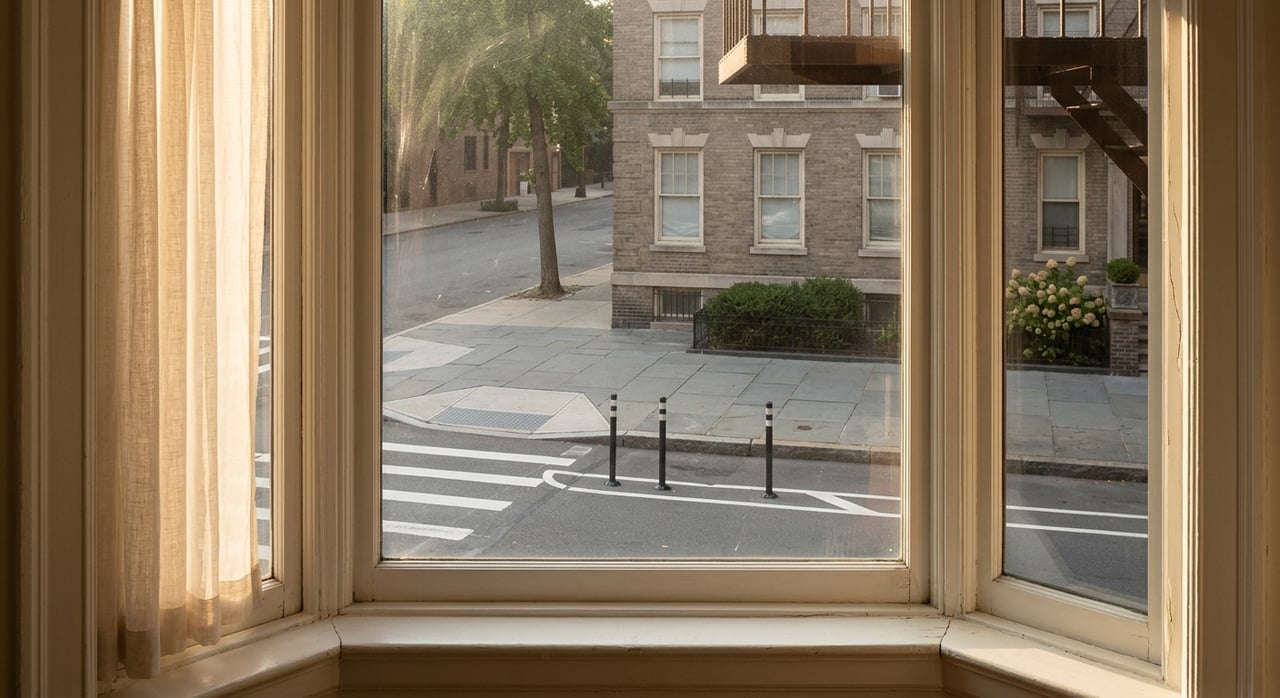
Sunnyside vs Woodside Commute Guide for Queens Riders
May 28, 2026
May 28, 2026
Trying to choose between Sunnyside and Woodside? If your daily routine depends on a smooth trip into Manhattan, that decision can shape how easy your mornings feel. The good news is that both Queens neighborhoods offer strong transit access, but they serve different kinds of commuters. Here’s how to compare Sunnyside and Woodside based on the commute that fits your life best.
Sunnyside and Woodside sit close to each other in western Queens, but they are not the same when it comes to daily travel. Sunnyside is centered around the 7 train and a compact local bus network, while Woodside stands out for its larger transit hub at 61 St-Woodside.
In simple terms, Sunnyside is a subway-first neighborhood and Woodside is a rail-hub neighborhood. If you know which kind of commute you want, the choice gets much easier.
Sunnyside is built around the 7 train. The neighborhood is served by 33 St-Rawson St, 40 St-Lowery St, and 46 St-Bliss St, which gives many residents more than one nearby subway option.
The area also has a solid local bus grid. According to the neighborhood board, Sunnyside is served by the Q32, Q39, Q60, Q104, and B24, which adds flexibility if you need a backup route or a crosstown trip.
One of Sunnyside’s biggest strengths is how naturally it supports walking to transit. The Lowery and Bliss plazas under the elevated 7 restrict vehicle traffic and see strong daily foot traffic, which reinforces the neighborhood’s car-light, pedestrian-focused feel.
If you want a straightforward trip to Midtown West, Sunnyside has a clear advantage. Because its 7 train stops sit west of Woodside’s 61 St stop, a Sunnyside trip to Times Sq-42 St is typically a few minutes shorter, based on station order and the MTA timetable.
That may not sound dramatic on paper, but over a workweek, even a small time savings can matter. If your routine is built around getting to Manhattan quickly with one train, Sunnyside often feels simple and efficient.
Woodside offers a different transit setup. Its main draw is the 61 St-Woodside hub, where the 7 train connects with the Long Island Rail Road and multiple bus routes.
MTA identifies 61 St-Woodside as ADA accessible, and the station connects to the LIRR, Q70-SBS, Q53-SBS, Q18, and Q32. That makes Woodside especially attractive if you want several travel options concentrated in one place.
The neighborhood board also notes that Woodside varies more block by block. Some parts are more residential, while areas closer to Roosevelt Avenue are more urban, so the exact convenience of car-free living can depend more on your address than it does in Sunnyside.
Woodside is the stronger pick if your commute depends on speed and flexibility. The LIRR gives you another layer of access beyond the subway, which can be a major plus if you commute to Penn Station or want easier East Side access.
The Port Washington Branch timetable shows Woodside-to-Penn Station examples at about 19 to 23 minutes on morning peak trains. MTA also says Woodside has 7 to 10 trains an hour to Manhattan, split between Penn Station and Grand Central.
If your main destination is Midtown West or Times Square, Sunnyside usually has the edge. The reason is simple: its 7 train stations come before Woodside when heading into Manhattan.
MTA weekday 7 train timetable examples show 61 St-Woodside reaching Times Sq-42 St in about 12 to 21 minutes, depending on the train. Since Sunnyside stations are one to several stops closer, the trip is generally a bit faster from Sunnyside.
For someone who wants a predictable, subway-first routine, that matters. You can often keep your commute simple with a short walk and a direct ride.
If your workday starts near Penn Station or depends on flexible Manhattan rail access, Woodside is hard to ignore. The LIRR gives Woodside a different kind of commuting advantage that Sunnyside does not match.
Morning peak examples from the Port Washington Branch show Woodside reaching Penn Station in around 19 to 23 minutes. Woodside also benefits from frequent Manhattan-bound LIRR service split between Penn Station and Grand Central, which can help if you want options.
That extra flexibility can be valuable if your office location changes, your schedule is irregular, or you simply want more than one realistic route into Manhattan.
Both neighborhoods have useful bus connections, but they play different roles. In Sunnyside, the key commuter-facing routes include the Q32 to Penn Station, the Q60 to East Midtown, and the Q104 to Astoria.
Woodside builds on that with more route variety around its hub. In addition to the Q32, it offers access to the Q47, Q53-SBS, and Q70-SBS, which creates more cross-borough flexibility when the bus becomes your backup plan.
If you mostly want a compact local network tied closely to the subway, Sunnyside feels very intuitive. If you value a larger menu of routes in one central area, Woodside offers more options.
That difference is important if your commute changes from day to day. A neighborhood with more route variety can make disruptions a little easier to manage.
Both neighborhoods support car-light living, and the broader Queens CD 2 PUMA data shows that 54.4 percent of occupied housing units have no vehicle available, while 37.6 percent have one vehicle available. That points to a market where many households do not rely heavily on a car.
Still, the day-to-day experience is not identical. Sunnyside gives off stronger car-free signals thanks to its pedestrian plazas, multiple 7 train stops, and compact neighborhood form.
Woodside is also transit-rich, but its layout feels more mixed. Some blocks are more purely residential, while others near Roosevelt Avenue feel more centered around the transit hub and heavier activity.
If you are deciding between Sunnyside and Woodside, focus less on which neighborhood is “better” and more on which one matches your routine. The right answer usually comes down to your main destination, your backup plan, and how much route flexibility you want.
Here’s a simple way to think about it:
Sunnyside and Woodside are both strong choices for Queens commuters, but they solve different problems. Sunnyside is the better fit if you want a straightforward subway commute and a neighborhood that feels closely built around walking to transit.
Woodside is the better fit if you want a bigger transit toolbox. With the 7 train, LIRR, and several bus connections at 61 St-Woodside, it gives you more ways to move around the city and into Manhattan.
If you are weighing apartments, condos, co-ops, or a future move in western Queens, the best next step is to compare not just the neighborhood name, but the exact address and commute pattern. If you want practical, neighborhood-level guidance in Sunnyside or Woodside, reach out to Nelson Aybar for help in a New York minute.
Stay up to date on the latest real estate trends.
Hardworking, goal-driven, and passionate Real Estate Professional has more than 18 years of experience in Business Operations and Real Estate Sales. Possess a unique ability to duplicate success within diverse marketplaces. Committed to providing the highest level of service possible. Contact him to learn more!