One Astoria, Three Markets: What Your Money Actually Buys Right Now
August 20, 2026
August 20, 2026
Redfin's numbers on Astoria this summer look like a warning sign. Over the three months ending June 2026, the median sale price per square foot came in at $674, down nearly 39 percent from the same period a year earlier. If you're comparing Astoria to another Queens or Brooklyn neighborhood and that's the number you saw, you might reasonably conclude the market cracked.
It didn't. What actually happened is that Astoria isn't one market. It's at least three, and they were moving in opposite directions at the same time.
Break Astoria into its recognized submarkets and the picture changes fast. In the second quarter of 2026, Old Astoria, the waterfront pocket built up around 12th and 14th Streets near Hallets Cove, posted a median sale price of $857,000, up 19.9 percent year over year, with price per square foot at $1,105, up 6.4 percent. That's real, per-unit appreciation. Buyers are paying more for the same square footage than they were a year ago.
South Astoria told a different story with a similar-looking top line. Its median sale price hit $874,000, up 18.9 percent year over year, almost identical growth to Old Astoria. But its price per square foot fell to $767, down 34.9 percent. The median rose while the per-square-foot value dropped, which only happens one way: bigger units were the ones selling. A median can climb even as the actual value of a square foot of Astoria real estate falls, if the mix of what's changing hands shifts toward larger properties.
| Submarket | Median Sale Price (Q2 2026) | YoY Change | Price/Sq Ft | YoY Change |
|---|---|---|---|---|
| Old Astoria | $857,000 | +19.9% | $1,105 | +6.4% |
| South Astoria | $874,000 | +18.9% | $767 | -34.9% |
Two submarkets with nearly identical price growth on paper. One is appreciating. One is not. The median can't tell the difference. The price per square foot can.
This is exactly the kind of effect that produces a scary-looking borough-wide average. Blend a submarket where per-square-foot value is climbing with one where it's sliding, and the aggregate number that comes out the other end tells you almost nothing about what any individual buyer will actually pay for space. If you're cross-shopping Astoria against a neighborhood with a cleaner, more uniform housing stock, the median price alone is not a fair comparison. Ask for price per square foot, and ask which submarket the comp is coming from.
The same submarket effect shows up in rentals, just with a different mechanism behind it. As of August 1, 2026, the average rent across Astoria overall stood at $3,390, up 5.58 percent from $3,211 a year earlier. Zumper's read on the same market as of early August put the increase closer to 12 percent year over year, a gap between two rent trackers wide enough to remind you that even the "official" average depends heavily on which buildings and leases get counted.
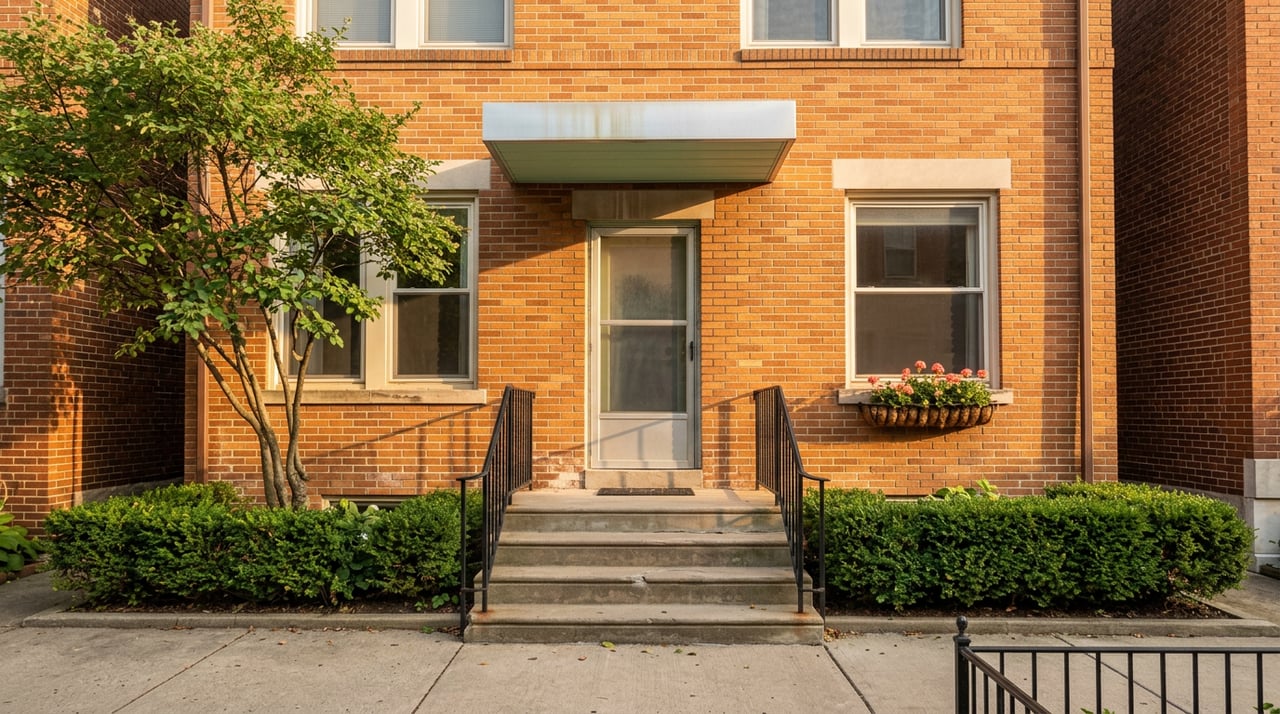
Neither number describes Ditmars-Steinway. That corridor's average rent runs closer to $2,391, roughly a thousand dollars below the Astoria-wide figure. The gap isn't random. Ditmars-Steinway has a genuinely different housing stock: brick buildings dating from the 1930s and 40s, more multifamily townhouses and single-family homes than the rest of Astoria, with some co-op buildings mixed in. It's also home to the Steinway and Sons piano factory and the Steinway Mansion, and the available inventory may differ from what renters and buyers seeking a new-construction unit closer to the waterfront will find.
There's a second layer worth knowing if you're actively hunting for a lease. Tenant-submitted rent data collected between January and April 2026 put actual signed studio rents around $2,210, one-bedrooms around $2,690, and two-bedrooms around $3,520, all running below the asking prices you'll see on most listing pages. Asking rent is aspirational. Closed lease data, concessions included, is what tells you whether a given unit is actually priced where the listing says it is.
Here's the local story that explains where new Astoria inventory is actually coming from, and it starts with a project that officially failed.
Innovation Queens was a large mixed-income redevelopment proposed for a five-block stretch near Steinway Street and 35th Avenue, adjacent to the Kaufman Arts District, the Museum of Moving Image, and the Frank Sinatra School of the Arts. Silverstein Properties eventually withdrew the proposal, and by most measures the project is dead.
The rezoning it triggered is not dead. Zoning changes outlive the projects that create them, and a different developer, The Domain Companies, is now moving forward with a 429-unit residential project called Elara on the same rezoned land, at 35-45, 35-33, and 35-42 41st Street near 36th Avenue. The plan splits into two buildings, an 18-story tower with 330 apartments (Elara East) and a 12-story building with 99 apartments (Elara West), including 107 permanently affordable units and amenities like coworking space, a screening room, and a communal roof terrace. Construction financing closed recently, with $175.6 million coming from Wells Fargo alongside equity partners Canyon Partners Real Estate and BLDG Management. Elara West is expected to open in February 2028, with Elara East following in September 2028.
If you've been told Astoria's north end has no major development pipeline because Innovation Queens collapsed, that's out of date. The zoning survived the developer. New supply is still coming, just under a different name and a different balance sheet, and it lands in 2028, which matters if you're trying to judge how much competition your future resale will face in that specific stretch of the neighborhood.
If you're putting Astoria up against another neighborhood on your shortlist, the headline median or the borough-wide rent average is the least useful number available to you. What actually tells you something:
None of this shows up in a single portal number. It shows up when you ask a submarket-specific question instead of a neighborhood-wide one.
Is Astoria's housing market cooling or heating up? It depends entirely on which submarket you're asking about. Old Astoria shows genuine per-square-foot appreciation. South Astoria's median is rising on the back of larger units selling, not on rising per-square-foot value. Treat "Astoria" as a category, not a single market, when you're reading any headline stat.
Does the Innovation Queens cancellation mean development near Steinway Street has stopped? No. The zoning that Innovation Queens established remains in place even though the original project was withdrawn. Elara, a 429-unit project from a different developer, is currently under construction on part of that rezoned land, with completion expected in 2028.
Astoria rewards the kind of attention most portals don't give it. If you want someone who tracks which pocket of the neighborhood is actually appreciating, which rent numbers are real versus aspirational, and which "dead" projects are quietly still alive through their zoning, that's the conversation worth having before you commit to a comparison based on one median price. Get help in a New York minute. Contact Nelson Aybar.
This article is general information, not legal, tax or financial advice. Consult a qualified professional about your situation.
Stay up to date on the latest real estate trends.
Hardworking, goal-driven, and passionate Real Estate Professional has more than 18 years of experience in Business Operations and Real Estate Sales. Possess a unique ability to duplicate success within diverse marketplaces. Committed to providing the highest level of service possible. Contact him to learn more!