Prospect Heights Car Free Living: Transit, Errands, and Routine
April 16, 2026
April 16, 2026
If you want a Brooklyn neighborhood where you can get around without planning your day around a car, Prospect Heights deserves a close look. You may be balancing a commute, errands, park time, and weekend plans, and you want a routine that feels simple, not stressful. The good news is that Prospect Heights has a strong mix of subway access, bus connections, walkable retail streets, and bike-friendly routes that can support daily life without a car. Let’s dive in.
Prospect Heights functions well for car-free living because your day can revolve around three connected systems. First, you have major transit access at Atlantic Av-Barclays Ctr and Atlantic Terminal. Second, you have local subway stops like Bergen St and Grand Army Plaza. Third, you have a practical walking and biking network centered on Vanderbilt Avenue and Underhill Avenue.
That combination gives you options. You can use the subway for commuting, walk for many daily errands, and turn to buses or the LIRR when you need to go farther. For many people, that flexibility is what makes the neighborhood feel manageable without owning a car.
For everyday commuting, the local anchors are Bergen St and Grand Army Plaza, both served by the 2 and 3 trains, according to the MTA subway map. If you live near either station, you have a straightforward starting point for getting into other parts of Brooklyn and Manhattan.
If you need more line choices, Atlantic Av-Barclays Ctr is the major hub nearby. It serves the D, N, R, 2, 3, 4, 5, B, and Q trains, which makes it one of the neighborhood’s biggest advantages for car-free living.
Across the street, Atlantic Terminal adds Long Island Rail Road service. That means your routine can stay local most days, but you still have regional rail access when you need a bigger trip, a visit outside the city, or another transit option.
If accessibility is a top priority, Atlantic Av-Barclays Ctr and Atlantic Terminal stand out. The MTA accessibility guide marks both as accessible, and Atlantic Terminal includes elevators, tactile warning strips, audiovisual passenger information, ticket machines, a waiting area, and connections to subways and buses.
That matters in real life. If you are comparing apartments or planning a move with accessibility in mind, these stations provide some of the clearest transit anchors in the area.
Subways get most of the attention, but buses are part of what makes Prospect Heights work day to day. City Planning materials show the B41, B45, B65, and B69 running within a couple blocks of the neighborhood, while the Atlantic Terminal and Barclays area also connects to the B37, B63, B67, and B103, according to NYC Planning materials.
That extra layer helps when the subway is not the best fit for your trip. You may be heading crosstown, traveling with bags, or trying to avoid multiple train transfers. In those moments, the bus can make a car-free routine more realistic.
There is one important tradeoff. NYC DOT’s Flatbush Avenue bus-lane proposal notes that Flatbush Avenue carries about 69,000 daily riders on six routes, with rush-hour bus speeds below 4 miles per hour. So while bus access is useful, travel times on that corridor can be slow.
One of the best signs that a neighborhood supports car-free living is how much you can do within a short walk. In Prospect Heights, that pattern shows up around Grand Army Plaza, Vanderbilt Avenue, Fulton Street, and Washington Avenue.
City Planning describes Vanderbilt Avenue as a neighborhood retail corridor with ground-floor retail, restaurants, bars, and local services. The same planning materials note that retail and service uses are concentrated along Vanderbilt Avenue and Fulton Street, while Washington Avenue also has mixed-use buildings with ground-floor retail.
In practical terms, that supports a simple weekly routine. You can walk out for smaller errands, everyday needs, and casual stops without turning each task into a major trip. That is often what makes a no-car lifestyle feel sustainable over time.
If you are trying to picture daily life here, a simple model looks like this:
This routine is an inference supported by the neighborhood’s transit, retail, and civic anchors. It is not about doing everything in one place. It is about having enough close-by options that you do not need a car to keep life moving.
Car-free living is not just about commuting. It is also about whether your weekends and downtime feel easy.
A strong local anchor is Brooklyn Public Library’s Central Library at 10 Grand Army Plaza. The library is fully accessible and served by the 2, 3, B, and Q trains, along with the B41, B45, B67, and B69 buses. For many residents, that gives Grand Army Plaza another practical role in the weekly routine.
Prospect Park is another major advantage. The Prospect Park Alliance says Park Drive is a 3.36-mile loop for runners, walkers, skaters, and cyclists, starting at Grand Army Plaza. If your version of car-free living includes outdoor time, exercise, or a weekend ride, that nearby access can make a big difference.
For biking, Citi Bike also identifies Grand Army Plaza & Plaza St West as a useful launch point, with additional stations along the park’s western and northern edges, as noted on the Prospect Park Alliance page. That makes it easier to build biking into your routine without overcomplicating things.
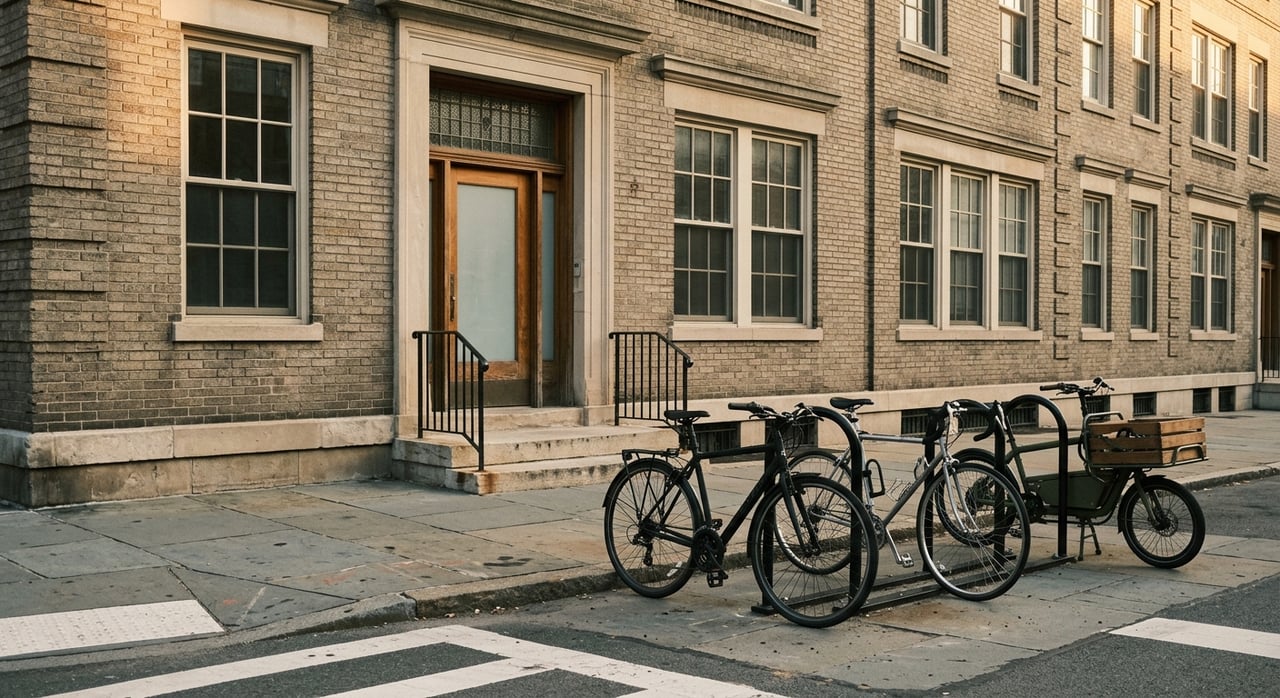
Within Prospect Heights itself, Vanderbilt Avenue and Underhill Avenue are the streets most closely tied to a car-light experience. NYC DOT describes them as part of the Prospect Heights Open Streets network, and says Underhill Plaza is the first step in a bike boulevard transformation.
That does not mean every street in the neighborhood feels the same. It does mean there are clear local corridors where walking, biking, and spending time outside are more central to the streetscape. If you want a home base where stepping out on foot feels natural, those streets are worth knowing.
One common question is how to handle the trips that do not fit in a quick neighborhood walk. Prospect Heights has a strong answer because Atlantic Terminal connects local and regional travel in one place.
As an accessible LIRR station with subway and bus connections, Atlantic Terminal makes larger shopping runs, appointments, and regional trips easier to manage. It also acts as a gateway to Downtown Brooklyn, which is the most practical west-side comparison point for orientation, based on City Planning context.
So even if your daily life stays close to home, you are not boxed in. You can keep your routine neighborhood-based while still having a reliable transit hub nearby.
No neighborhood is perfect, and car-free living in Prospect Heights comes with tradeoffs. The area is especially strong for commuters, park users, and people who want many errands within a few blocks, but some corridors are busier and more intense than others.
For example, NYC Planning describes Atlantic Avenue as a through truck route with narrow sidewalks. NYC DOT also treats Flatbush Avenue as a major safety concern corridor. That means your experience can vary a lot depending on the exact block and the streets you use most often.
This is why neighborhood fit matters. If you are considering Prospect Heights, it helps to think beyond the address itself and focus on how close you are to the stations, retail corridors, park access, and calmer walking routes you expect to use every week.
Prospect Heights can be a strong fit if you want a neighborhood where transit is easy to reach, everyday errands can often be handled on foot, and park access is part of your routine. It is especially practical if your week mixes commuting, quick neighborhood stops, and occasional larger trips through Atlantic Terminal.
It may also appeal to you if you want Brooklyn living that feels connected both east toward Prospect Park and west toward Downtown Brooklyn. That kind of location flexibility is one of the neighborhood’s biggest strengths.
If you are weighing Prospect Heights against nearby areas, the details matter. The right apartment or home is not just about square footage. It is also about how easily your day flows once you walk out the door. If you want help finding a place that fits the way you actually live, connect with Nelson Aybar for practical, neighborhood-level guidance in a New York minute.
Stay up to date on the latest real estate trends.

Hardworking, goal-driven, and passionate Real Estate Professional has more than 18 years of experience in Business Operations and Real Estate Sales. Possess a unique ability to duplicate success within diverse marketplaces. Committed to providing the highest level of service possible. Contact him to learn more!